
If you are starting a salon with hair removal, you will soon come across three names: diode, IPL and alexandrite. They are often mentioned in the same breath, but they are fundamentally different technologies. The difference lies not only in the price, but above all in what you can do with them, for whom, and how you work with them day to day. In this article we put the three side by side, without the sales talk.
How hair removal with light works
All three technologies work on the same principle: light is absorbed by the pigment (melanin) in the hair, turns into heat and damages the hair root. The difference lies in the type of light. 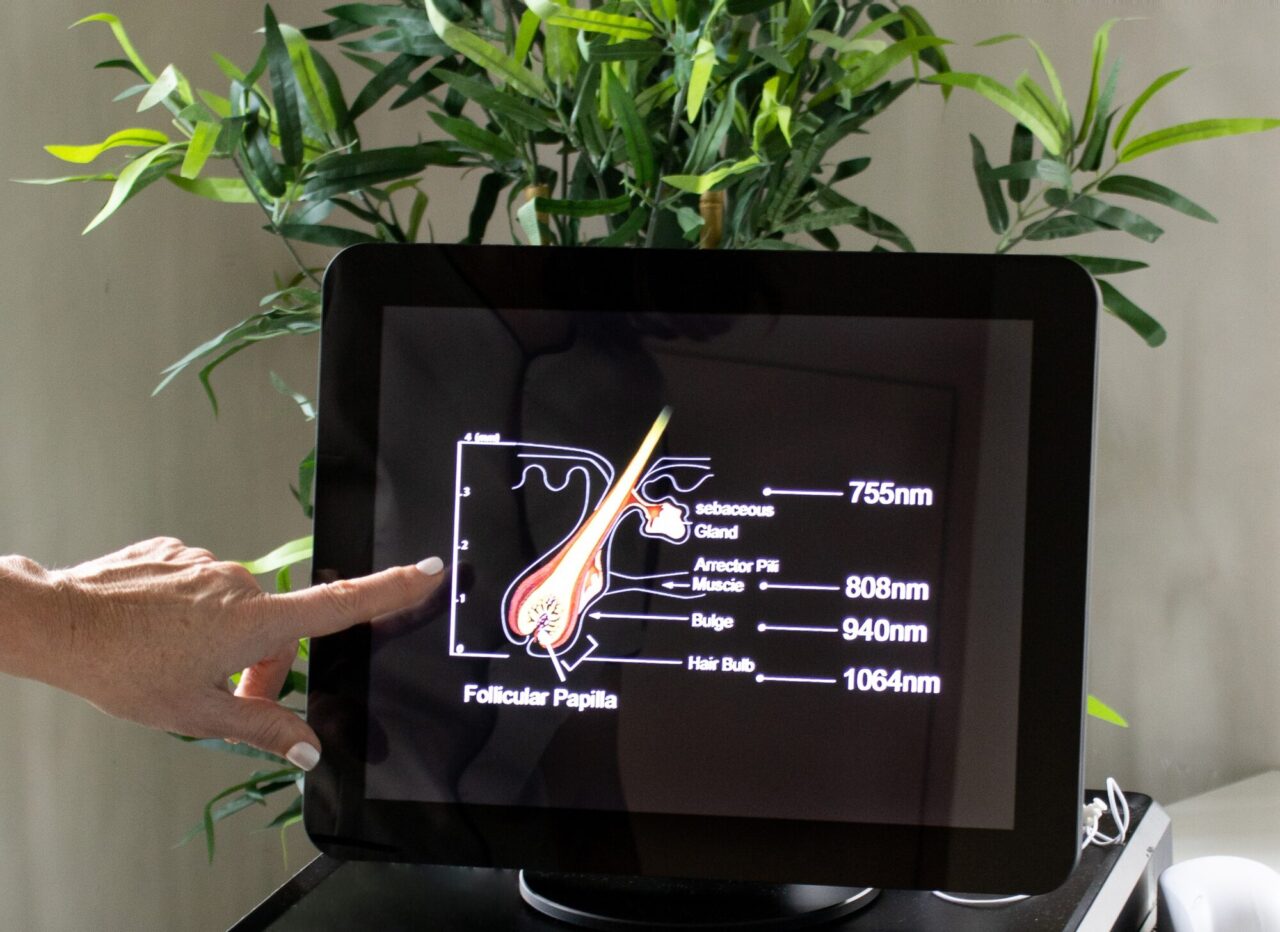 A laser emits one specific wavelength, as a directed, concentrated beam. IPL (Intense Pulsed Light) is a flash lamp with a broad spectrum of wavelengths, part of which is removed with filters.
IPL: accessible, but more limited
IPL is usually the cheapest to buy and is therefore often chosen as a first device. Because the light is broad, part of the energy is lost to wavelengths that do very little. In practice that means: more treatments needed, less suitable for dark skin types and less effect on fine or light hair. For a salon that offers hair removal as a sideline, that can be perfectly fine. If you want to make it a core treatment, you will often come up against its limits.
Alexandrite: strong on light skin
The alexandrite laser works at around 755 nanometres. That light is absorbed well by melanin, which makes it effective on light skin with dark hair. The drawback is the flip side of that same property: on dark skin the light is also absorbed by the pigment in the skin, with a higher risk of burns and pigment changes. Alexandrite equipment is also often larger, more expensive to maintain and more delicate.
Diode: the all-rounder for the salon
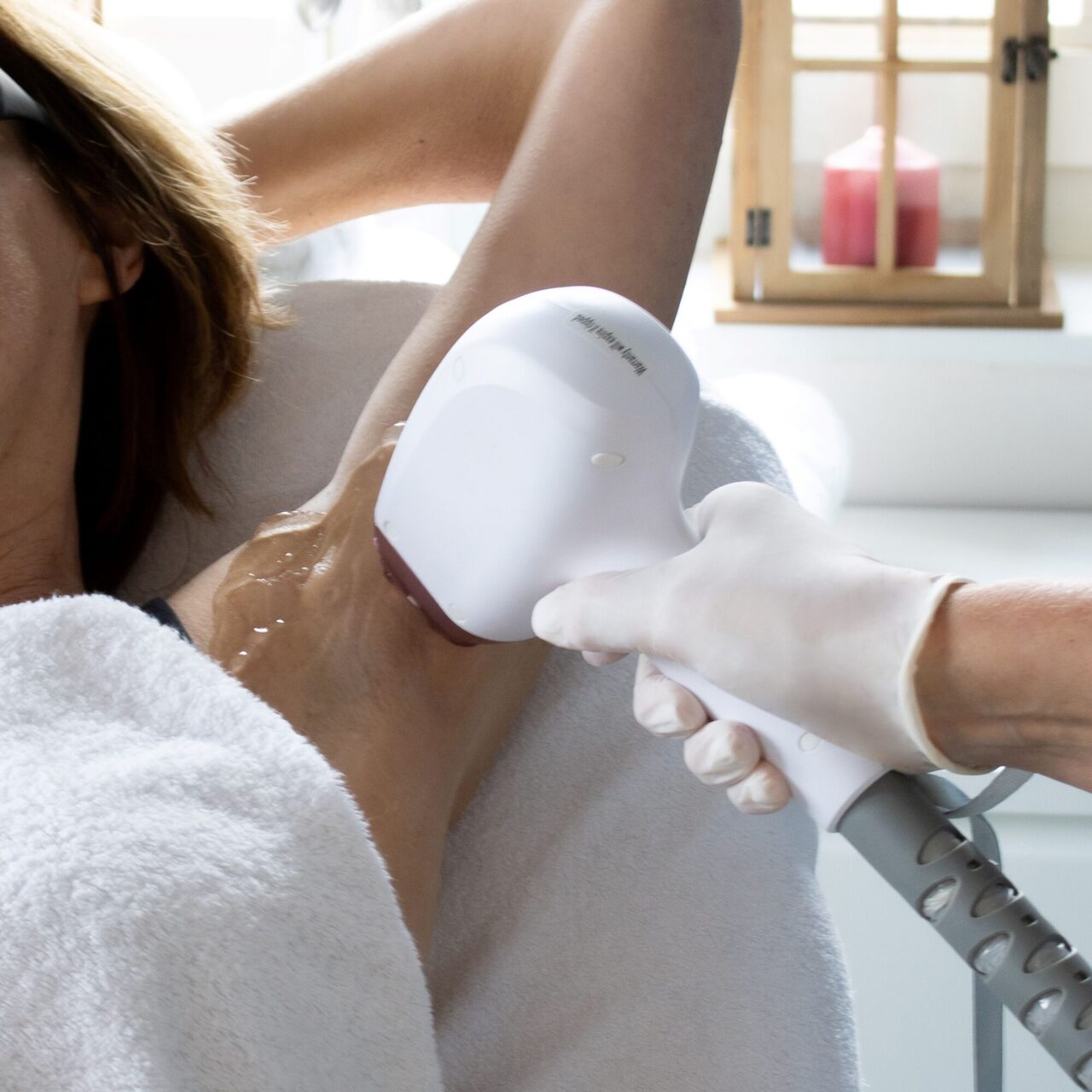
The diode laser usually works at 808 or 810 nanometres, sometimes combined with 755 and 1064 nanometres in one handpiece. That wavelength penetrates deeper and is absorbed less by skin pigment, so it can be used safely on more skin types. Modern diode lasers cool the skin during the treatment, which makes it more comfortable and lets you work faster. For a salon that wants to serve clients of all skin types, this is the reason diode has become the standard.
What this means for your choice
Ask yourself three questions. What kind of clients are there in my area: mostly light-skinned, or mixed? Will hair removal be a core treatment or an add-on? And how many treatments a week do I want to be able to do? If you answer “mixed” to the first question and “core” to the second, you will almost always end up with diode. If you mainly want to try it out, you can start with IPL, but you should count on a second investment once things take off.
Not sure which technology fits your plans? We are happy to think it through with you, even if the answer is that you should not buy just yet.